What Is Neurodiversity? A Guide to Understanding Brains, Behavior, and Belonging

Neurodiversity is more than just a buzzword. It's a powerful shift in how we understand brains, behavior, and what it truly means to belong. In this article, I’ll break down what neurodiversity really means and why it matters.

Brains Are Naturally Diverse
Neurodiversity is the idea that neurological differences—like autism, ADHD, and more—are natural and valuable variations of the human brain. It means these differences aren’t “disorders” or “problems” to be fixed, but part of the rich variety of how people think and experience the world. This concept grew out of conversations within the autistic community and was popularized in the 1990s by Australian sociologist Judy Singer, who helped bring attention to the importance of seeing these differences as a natural part of human diversity—much like biodiversity in nature, where diversity helps the ecosystem thrive.

These differences can be subtle or significant, but they're all part of the vast spectrum of human experience. Rather than labeling certain brains as "defective," the neurodiversity movement aligns with the social model of disability. This perspective emphasizes that many challenges arise not from an individual's differences, but from a lack of societal understanding and environments that aren't designed to support a full range of human variation. It’s important to remember, though, that this doesn't negate the very real internal struggles or support needs some neurodivergent individuals experience; rather, it highlights how societal barriers can compound these difficulties and limit their ability to thrive
What is Neurodivergence?
When someone's brain develops or functions in ways that diverge from what society typically considers “typical” (referred to as “neurotypical” in the neurodiversity community), they may identify as neurodivergent. Traditionally, this umbrella term has included formally recognized neurodevelopmental conditions like:
Autism Spectrum Disorder (ASD)
Attention-Deficit/Hyperactivity Disorder (ADHD)
Learning disabilities such as dyslexia or dyscalculia
These are all recognized in the DSM-5, the standard manual used by mental health professionals in the United States for diagnosis.
However, many affirming communities (and a growing number of clinicians) also recognize that other brain-based experiences can fall under the neurodivergent umbrella. This might include:
Obsessive-Compulsive Disorder (OCD)
Generalized or chronic anxiety
Complex PTSD or trauma-based responses
Depression and mood disorders
Schizophrenia or related disorders
Personality disorders
While these conditions may not always be labeled "neurodivergent" in clinical literature, in real-life experience, they often profoundly affect how a person thinks, feels, processes information, and navigates the world.
Neurodivergence Shows Up in Many Ways
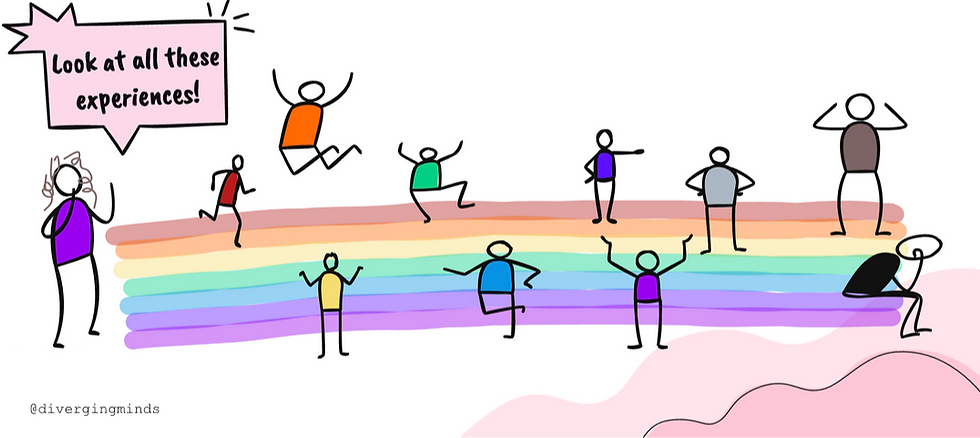
Neurodivergence isn't a single experience. It manifests in diverse ways, impacting many different areas, including (but not limited to):
Communication and socialization styles
Sensory processing (e.g., how someone experiences noise, texture, or light)
Attention, movement, or energy regulation
Emotional regulation or learning differences
Some neurodivergent people may need little to no daily support, while others may require intensive care, communication assistance, or highly structured environments. And some people may need more support in one area versus another area, say for instance: significant support for communication but very little support for processing sensory information. All experiences on this vast spectrum are equally valid and deserve respect and understanding.
It's Not Just the Brain—It's the World Around Us
A core philosophy in the neurodiversity movement is that a neurodivergent brain isn't a defect. However, that doesn't mean that everything is perfect or that life is always easy.
Many of the challenges neurodivergent people face stem from trying to survive environments that were designed for neurotypical brains and ways of functioning. But when given the right support, many neurodivergent folks can thrive while not abandoning who they are or fundamentally changing their entire way of processing the world.
For example, people who are dyslexic can have a very hard time learning to read when provided with the same type of reading instruction as everyone else. However, when given explicit, structured reading instruction that aligns with how they learn, they make significant improvements. In other words, when given reading instruction that actually supports how their brains process written information, they are often able to learn to read with a depth of understanding. They may still need accommodations, such as extended time or audiobooks to reduce cognitive load, but it’s not that they can’t learn how to read or that they can’t understand. They just need to be taught in a way that works with their brain, and given ongoing accommodations if needed after intervention.
On that note, it’s important to acknowledge that some people have very real and substantial lifelong support needs that won’t be ameliorated by one specific intervention or a few accommodations. Neurodivergence exists across a wide spectrum. No matter the intensity of their support needs, everyone in the neurodivergent community deserves to be met with dignity, care, and understanding, not shame or judgment.
We don't have to choose between acceptance and support. We need both, and that’s where real inclusion happens. Supporting people without trying to fundamentally change who they are is at the heart of neurodiversity-affirming care.

Remember: It’s Not All Challenges
We have to remember that, while there are challenges, these differences can also be strengths. Many neurodivergent people possess unique strengths that are inextricably intertwined with the way their brains work. These might include:
Deep focus or hyperfocus on areas of interest
Creative thinking or divergent problem-solving abilities
Exceptional pattern recognition or strong memory
Heightened emotional sensitivity and empathy
An ability to stay calm in the midst of a crisis where others might panic
Remarkable resilience developed from navigating often-inaccessible systems
These strengths often shine when people have access to the right supports: accommodations that meet their needs, communities that embrace difference, and the freedom to be themselves.

And when someone is struggling, what they need isn’t to be “fixed”—they need care that sees them as a whole person with valid contributions to the world. Neurodiversity-affirming therapy can offer that.
Why Understanding Neurodiversity Matters
Real inclusion means honoring all neurodivergent people—those who need full-time care, those who use communication devices, those who "stim," "mask," advocate fiercely, or simply exist a little differently.
When we design our spaces, systems, and interactions with neurodiversity in mind, we create environments where everyone has a genuine chance to feel safe, supported, and valued. This is about more than just awareness; it's about fostering acceptance, promoting equity, and providing compassionate, inclusive care.
Understanding neurodiversity means understanding that neurodiversity isn't just a challenge to overcome. It's a world to embrace.
Have a topic you'd like to see discussed in a future post? I’d love to hear from you—contact me and let me know what you’d like to learn more about.
Looking for Support?
If you or someone you love is navigating neurodivergence, therapy can be a powerful space for growth, self-understanding, and tailored support.
I offer online neurodiversity-affirming therapy throughout New York, working with both adults and children. Whether you're exploring your identity, navigating burnout, seeking sensory or emotional regulation tools, or simply want a space where you don't feel the need to mask—I'm here to help.
Let's explore this journey together.
Disclaimer: This blog and all posts are for informational and educational purposes only and are not substitutes for professional mental health care. If you’re in crisis or need therapeutic support, please contact a licensed therapist or emergency services in your area.